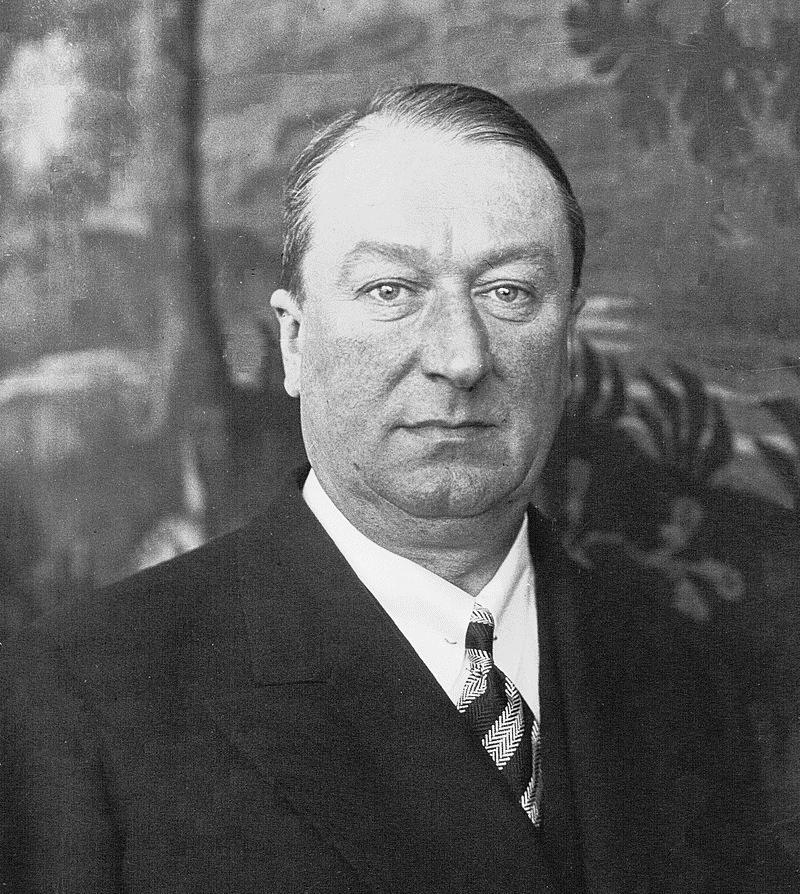
Ettore Bugatti was born in Milan in 1881 into a family of artists: his father, Carlo, designed furniture, and his brother, Rembrandt, became a celebrated sculptor of animals. Ettore chose machines instead, and designed his first car while still in his teens.
In 1909 he founded his own company at Molsheim, in Alsace — then part of Germany, later France. From the start, his cars were as much about beauty as about engineering: he cared about how a component looked as much as how it worked.
His masterpiece was the Type 35 of 1924, with its eight-cylinder engine and cast aluminium wheels. It won the Targa Florio five times in a row and is credited with winning more than a thousand races — more than any car of its time. At the other extreme was the Type 41 Royale, an enormous luxury car topped with an elephant mascot modelled on one of Rembrandt’s sculptures. Only a handful were built.
His son Jean, who designed the Type 57, was killed testing a car in 1939. After the Second World War the business never recovered, and Ettore died in Paris in 1947.
The name was revived decades later, first for the EB110 and then under Volkswagen for the Veyron and the Chiron, and today belongs to Bugatti Rimac. None of those cars was his, but every one of them carries his name and the horseshoe grille he gave it.
Foto: Wikimedia Commons · Wikipedia